Have you let yourself go a bit in recent months or years? Do you have a special event coming up soon? Wouldn’t you like to look like your old self for that special day? Losing weight quickly is something many of us strive to do from time to time, but it can be difficult. Some of you may even believe that quick weight loss is impossible to achieve short of starving yourself. However, this is simply not true. The following article will teach you how you can safely lose weight quickly and keep that weight off. Read on and learn some great tips for losing weight fast!
The first step you are going to take is to substitute all of your beverages with water. So goodbye to sodas and juices that are full of unnecessary sugar. You’d be surprised to learn how many extra calories you can consume from sodas alone, and these calories have no nutritional benefits other than expanding your waist line. Some of you may find it difficult to drink only water all day every day, but give it time, and you’ll soon see that your cravings for sugary drinks will go away, and you will enjoy much more energy throughout the day when you drink enough water. Strive to drink a minimum of 8 glasses of water each day (more if you are working out). Carrying around a water bottle will make it much easier for you to get your daily requirements of water as it will always be around so you never forget to drink up.
If you are serious about losing weight in a hurry then you are going to have to find some way to burn calories. Now running 5 miles a day would do the job, but lets be honest, who on earth wants to do that? Rather, it is important that you find an activity that you enjoy doing so that you can stay motivated during your weight loss journey. Try playing basketball or any other sport that you enjoy, and you will soon see the pounds start to melt away.
When it comes to losing weight quickly, you must burn more calories than you consume. For this reason, it is of the utmost importance that you keep your portions small when you do it. This doesn’t mean you have to starve yourself, but you should be making a conscious habit of eating only what you need to sustain your energy throughout the day. Try breaking your meals into 5 small meals instead of 3 larger ones so that you feel fuller throughout the entire day.
We’ve just gone over a few of the many ways you can help yourself lose weight quickly. You should take the time and do some research on your own to find even more helpful ways to lose weight, but if you implement the tips mentioned in this article, you are sure to drop those pounds in not time and enjoy the body you once had. Good luck!
Original article and pictures take gethealthytip.com site
Original article and pictures take http://www.ebay.co.uk/sch/i.html?_trksid=p2050601.m570.l1313.TR10.TRC0.Xyoulookslim.TRS0&_nkw=youlookslim&_sacat=0&_from=R40 site
Original article and pictures take gainmusclenaturally.blogspot.com site
Original article and pictures take gain10poundsmuscle4weeks.blogspot.com site
A big cause of Polycystic Ovarian Syndrome (PCOS) weight gain can be the loss of muscle mass. As you age, muscle mass diminishes and if you don’t use it, you loose it. It’s that simple. Decreased muscle mass leads to slower metabolism, which can lead to increased fat storage and the risk of obesity.
Females increase their muscle size and strength through growth and development until around the age of 20. But, unless strength-building techniques are practiced beyond that age, ½ pound of muscle on average will be lost each year. After the age of fifty, that amount increases. If you fail to eat a balanced, nutritious PCOS diet and exercise your muscles regularly, the loss of muscle will be replaced by subcutaneous fat as well as fatty tissue infiltration of your organs and existing muscles.
Strength training means doing exercises that build muscle strength. You can lift free weights, use weight machines or do exercises that use your own body resistance, such as push-ups, pull-ups or sit-ups. Proper strength training makes muscles stronger by asking them to do more than usual. The body responds to this challenge by becoming stronger. Strength training must be pursued gradually and carefully but can be done at any age.
One of the many benefits of strength training is that it is good for your heart, which works as a pump for blood while muscles are the engine. The stronger the muscles, the more effectively and efficiently they draw oxygen from the blood and therefore reduce the demand on the heart and lungs. The cardio-pulmonary benefits from an aerobic exercise program come from the increased strength and endurance of the specific muscles used.
Strong muscles also increase insulin sensitivity, which allows better control of blood sugar and reduces the risk of developing Insulin Resistance. This latter condition causes an imbalance in blood sugar and insulin levels with several possible outcomes. On the one hand, the pancreas can become worn out and insulin production slows down to abnormally low levels, resulting in reversible Pre-Diabetes, which, if neglected, can lead to Type 2 Diabetes. This latter disorder can only be managed and may require daily injections of insulin for the rest of a person’s life.
On the other hand, the Insulin-Resistant patient may not develop Pre- and Type 2 Diabetes because the pancreas over-compensates and the person suffers from abnormally high levels of insulin in the blood, called hyperinsulinemia. This condition can cause obesity as well as high blood pressure, high levels of triglycerides and LDL “bad” cholesterol, low HDL “good” cholesterol, heart disease and possibly some cancers.
How often you should train depends on your overall PCOS health and is different from person to person. Most people can make excellent progress lifting 2-4 days per week for only 20-40 minutes per workout. But always consult a doctor about your individual health status before beginning a strenuous new exercise regime.
There are many exercises to choose from. Try to select a good balance of exercises so that you are doing exercises for your upper body, lower body and abdominal muscles. Good basic upper body exercises include: bench press, pull-downs, pull-ups, triceps extensions, dips, and curls.
Good basic lower body exercises include: squats, lunges, calf raises, leg curls, leg extensions. Your abdomen can be strengthened by doing crunches (sit-ups).
You can use either free weights or weight machines. One is not better than the other. Each has its own benefits and drawbacks.
Free weights: Free weights use dumbbells, barbells or your body weight for resistance (such as push-ups). Dumbbells are the weights that you hold in each hand. Barbells are the longer bars that can be used for exercises such as squats or bench press.
Weight machines: There are many different types of machine exercises. The machine balances the weight load for you, which makes the exercise easier. Rep is short for a repetition.
A rep means that you have completed the range of motion once for an exercise. For example, doing 1 pull-up would be 1 rep.
How you design your training program depends on your goal. If you want to become lean and lose body fat, you train differently than if you want to build your muscle size.
Strength training can help you lose weight because, after a workout, your body is using glucose and insulin at a faster rate for up to 24 hours. So you are still helping your body lose weight hours after your workout. One of the ways to lose weight is to use more energy than you create by eating. However, one of the biggest mistakes people make is not eating enough protein. You need to eat fewer calories that come from sugar or carbohydrates but make sure that you continue to eat enough protein, which helps you build lean muscle.
Women do not need to worry that lifting weights will make them gain weight and get bulky. Since muscle takes up much less space than fat does, women who lift weights will start to notice their clothes fit more loosely. Women are also less likely to gain muscle size compared to men who lift weights because women have much lower testosterone levels (nearly 20 times less) than men. Testosterone helps muscle growth.
There are many types of training programs. Ask a certified strength and conditioning coach or personal trainer to design a program that will work for you. Before starting any strength training program, you should also make sure to:
Eat right: The time when your body is getting stronger is actually in between workouts, during the recovery period. If you train hard, but eat poorly, your body won’t respond to the workouts as well.
Change the workout: Every so often, change the exercises in the workout, the rep ranges, the rest times, the exercise order or the number of sets. If you do the same workout week after week without altering some of the variables, your progress will stall.
Posture is important: Do not sacrifice proper posture for the sake of lifting more weight. If necessary, use less weight and do the exercise correctly. Be careful toward the end of a set or workout when it is harder to have good posture and form. Exhale when you are lifting a weight, inhale when you are lowering a weight. Don’t hold your breath.
Exercise your entire body: Many people under-train their legs and over-train their upper body. Be balanced in your training approach. Try to train opposing muscle equally (for example, train both biceps and triceps, quads and hamstrings, back and chest).
Be realistic: Make sure you are realistic about your exercise program. It is better to design a program where you lift 2 days a week and always do your workouts than to plan to lift 4 days a week and have trouble finding time to complete your workout plan.
Don’t over-do things: Over-training is when your body is not able to recuperate between workouts. You may be over-training if you are getting headaches or nausea or have a fast heart rate when you wake up. If you find yourself dreading going to the gym, feeling run down, or lacking a good night’s sleep, take a day or two off before training again.
We are here to help. Please contact us and ask us any questions about the Insulite PCOS System or anything else that is on your mind. Let us know how we can support you.
HGH supplements are among a small number of products which can earn that claim. No wonder, l-arginine is a key ingredient in lots of penile enhancement supplements. The usage of supplements is among the most effective solutions for you. Perhaps, you’re not taking the most suitable supplements that may do amazing things for you.
Ideas, Formulas and Shortcuts for Gain Muscle Supplements for Men
Before you even begin thinking about supplements to put on muscle or drop weight, you should acquire your nutrition in order. They take their supplements using a diet and also a focused muscle routine. The best technique for finding the best weight gain supplements in your specific case would be to never quit. That is why it may be important to try a variety of weight gain supplements before finding the one which is suitable for your particular needs.
Hard gainers discover that it’s really hard to gain weight and muscles because of their high metabolism. It has to consist of proper diet together with an ideal balance of exercises specially meant for hard gainers.
Gaining weight and muscles is not too easy but don’t get discouraged as you hold a few secrets not yet been tried out. There is a variety of men who aren’t willing or even able enough to lift enough weights to result within the weight gain they need or want. Many athletes will take supplements so as to increase their endurance and strength and in addition, it can increase muscle size.
There are only three types of muscle growth supplements which are considered the very best supplements to put on muscle. These are merely a number of the supplements available for building muscle. Without sufficient rates of hormones, you shouldn’t have the ability to show improvement in muscle development. Such supplements additionally help stimulate growth hormone production within your body.
Proteins are the building blocks of muscle and also you simply are not able to expect to do a high degree of physical activity for a lengthy time period, while attempting to raise your gains without proper protein intake. Creatine will provide your muscle more energy. For instance, whey protein is a typical bodybuilding supplement, and one which you are going to likely find useful too.
Gain Muscle Supplements for Men – Dead or Alive?
Building muscle mass whilst sculpting your own body for the best look may be long and hard process. If you truly desire to gain weight, the best method to do so is to construct your muscle mass. Aside from this, however they will help ensure maximum muscle development. On the surface this appears to be an affordable reason and one which is undoubtedly plays an important portion in the muscle gaining obsession.
Put simply, the most effective muscle building supplements might actually be the worst thing you may do in order to gain muscle mass. These exercises will provide you with more bang for the buck as well as help release large sums growth hormones to enable you to gain that muscle you’re seeking to pack on. For the ordinary guy more training will not equate to more muscle. These forms of exercises want to get the development of your own perfect muscle mass.
What the majority of men don’t know, is there is a genuine secret behind gaining muscle. In addition, they’re also able to assist you to gain lean muscle and cut back body fat. In reality if you understand what you’re doing you can even improve your muscle mass whilst losing fat, for a win-win that’ll get you particularly in great shape. You also need to permit your muscles to rest.
In recent years, bodybuilding/hypertrophy training has divided itself into a number of different ‘camps’ with quite a bit of argument and debate going on over what the optimal training frequency for muscle growth is. In this article, I want to look at the three most common training frequencies (in terms of how often a given muscle group is hit each week, I’m not talking about overall training frequency) and some of their pros and cons. First I’m going to look at the two opposite extremes of training each muscle group before giving my own preferred training frequency. I want to make it clear that I’m looking only at training frequency as it applies to explicit mass gains and hypertrophy type goals. I’m not talking about athletes or strength per se (although the recommendations end up being fairly similar) but focusing only on muscle growth as an explicit end goal of training. Three Times Per Week for Each Muscle Group It’s often claimed that historically, bodybuilders trained every bodypart three times per week and there is certainly some indication that that is the case (especially in the pre-steroid era). Training systems that look a lot like the heavy/light/medium systems first advocated by Bill Starr and re-popularized in recent years by coaches such as Mark Rippetoe and Glenn Pendlay (as discussed in my article The 5X5 Program) seem to crop up fairly commonly when you look at the workouts of old time lifters. It’s worth noting that many lifters of that era trained primarily for strength with size gains being more of a ‘side-effect’ of the training, rather than being such an explicit goal. Still, there is a point to be made that training for strength gains (plus sufficient food) tends to result in size gains. Whether or not they are a ‘side-effect’ or however you want to look at it doesn’t change the overall success of that approach: grow stronger and eat and you will grow. More modern training systems such as Bryan Haycock’s Hypertrophy Specific Training are also based around that type of higher training frequency. I’m sure there are others. Typical arguments for a higher frequency of training revolve around gene expression and keeping the genes involved in hypertrophy running more constantly by training at a higher frequency and, again, there is certainly some truth to that idea; arguments about the type course of increased protein synthesis often crop up as well. Typically full body workouts ranging from as few as three exercises per workout to as many as perhaps 8-10 depending on the specific implementation are performed with this type of training. An additional potential benefit to a higher frequency of training, and this is especially true for beginning training, is that performing movements more frequently tends to improve motor learning. And since a majority of the adaptations that occur initially to training are neural in nature, the faster you can get through them adaptation, the sooner you can get into real growth. However, outside of that one situation, I find that there are some major drawbacks to the idea of training full body three times per week for optimal growth. One of these is that once trainees start handling heavy loads, full body workouts can become incredibly difficult to complete: the loading used in exercises done early in the workout tend to severely limit what can be done later in the workout and something invariably suffers. This is especially true if heavy leg training is done at the front of the workout: this often leaves about zero energy for the rest of the workout. And performing leg training last often means that it suffers. Back squatting heavily with a tired shoudler girdle after upper body training is problematic at best and dangerous at worst. Additionally, there is at least some indication that there is an optimal training volume per muscle group (a topic I’ll cover in a later article) and achieving that volume in the context of a full body workout tends to become nearly impossible without the workout being several hours long. So under most circumstances, I don’t find that hitting each muscle group three times per week is optimal for most trainees. It can be accomplished with proper cycling of intensity for the different bodyparts but since, in my experience, bodybuilders like to train hard pretty much all of the time, suggestions to do that often fall on deaf ears. Blast Every Muscle Group Once Per Week At the other extreme of training is the idea, that seems to have primarily developed as steroids started to enter the picture, that a muscle group should be blasted into oblivion once per week and then allowed to rest before training again. Many critics of higher frequency training will point to successful elite (read: drug using) bodybuilders who train that way. Or who at least claim to train that way. Typically in this approach, one or perhaps two muscle groups would be chosen for a single workout with a fairly large volume of training (often 15-20 sets of 3-4 different exercises) performed for each. Hitting all of the angles, blitzing and bombing were all ideas that came out of this type of approach and generally the body is split across 4 or more workouts which each muscle group getting blasted once every 7 days. Now, there is no denying that this approach seems to work at the elite level of bodybuilding. However, there are often a lot of other factors involved that people tend to ignore. The main one, of course, is drugs especially steroids (it’s no coincidence that this approach to training developed primarily as steroid use was starting to increase among bodybuilders). People don’t like to hear it but anabolic steroids will generate muscle growth without training at all and, to a great degree, many elite bodybuilders seem to succeed in spite of their training rather than because of it. In that context, I know of several coaches who work with drug using bodybuilders and invariably growth is better with a higher frequency of training, even in the context of steroid use. Another factor is that even if top level bodybuilders only hit every bodypart once per week after they have been training for 10 or more years, that’s usually not how they built the majority of their muscle mass (if their reports of what they did earlier in their career are accurate). Basically, looking at the elite level of any sport and how they train after 15 years of training is usually a losing proposition, what they might be doing at the peak of their career and what they did to get there are often very different things indeed. But of perhaps more relevance, outside of a small percentage of folks, I simply haven’t seen the majority of natural trainees grow optimally training in this fashion. Basically, it just doesn’t work for the majority in my experience (and in the experience of a lot of coaches I know). Sure, we can always look at the ‘big guys’ in the gym who are doing fine hitting everything once per week but the fact is that the majority of folks training that way aren’t usually growing well at all. As well, for naturals, the lower frequency of training tends to lead people to do far too much volume at any given workout. As I mentioned above, there appears to be an optimal volume of training for each bodypart with both too little and too much volume being a problem. Naturals who do endless sets in a given workout (which is not only allowed but usually mandated by low frequency training) not only aren’t stimulating better growth, they end up cutting into their recovery with excessive volume. Few bodyparts in my experience need more than two exercises (back is possibly an exception) in the first place and being able to do a zillion overlapping and redundant exercises is usually pointless for most trainees anyhow. For the most part, I can’t think of any situation where I’d recommend only hitting a bodypart once per week for growth unless the goal was to simply maintain a given muscle group. And that’s usually in the context of a specialization cycle (a topic for another day) when other bodyparts are being trained more frequently. One that I might mention (in a sarcastic way) would be for people who are addicted to being sore or exhausted from training. At least one of the reasons that I think people stick with low frequency training in the absence of good results is that they always get to walk out of the gym feeling like they have completely exhausted a given muscle group. As well, low frequency training tends to get people sore more consistently than a higher training frequency. People who are more concerned with acute exhaustion or crippling soreness rather than actual progress may want to just keep on doing what they are doing….like I said, just a bit sarcastic. Hit Each Muscle Group Between Every 5th Day and Twice Per Week Which brings us to my preferred training frequency. Which, given my tendency to middle of the road types of recommendations for most things probably won’t surprise anybody at all. For most applications, for the average trainee, I think hitting each muscle group somewhere between twice per week or a minimum of every 5th day yields about optimal results. Which is best for a given individual depends on individual recovery and how often they can be in the gym. Again, here I’m talking about an optimal training frequency for the majority of natural trainees. Again, as I noted above, I know of several coaches who work with steroid using bodybuilders who report better results with this type of training frequency. Generally speaking, you might see this frequency of training implemented as some type of upper/lower split routine (which is the basis of my generic bulking routine) although there are many other workable options to achieve this training frequency per bodypart. And it’s worth noting that a lot of successful training systems (whether strength or hypertrophy oriented) use this type of training frequency. Most powerlifting programs use a generic template with two upper body and two lower body workouts per week; although the exercises may differ on each day, there is generally sufficient overlap that each muscle group is being hit about twice per week. Doggcrapp training, for example, uses a split of chest/shoulders/triceps/back for one workout and legs/arms for the other. The workouts are alternated on a three days per week program which means that each muscle group is being hit every 5 days. To give you an idea of how this might be implemented weekly, I’ve shown how the two different training frequencies could be achieved in several different ways depending on the circumstances. Although, I’ve used an upper/lower body template in the example below, any type of approach that divided up the body into two different workouts would work just as well. I’ve also shown a higher weekly training frequency for people with that kind of flexibility and/or who want to be in the gym more often. I’m also assuming that most people will train on the same days each week which I find is the most common pattern for people with a job, families, etc. Of course, people who can train different days each week can use other variations of the below approaches since they can vary the days of the week that they are in the gym. Oh yeah, blank days would either be taken off or could be used for metabolic work (e.g. the type of thing I described in the article Cardio and Mass Gains). Day Twice Per Week Twice Per Week (No Weekend) Higher Frequency* Every 5th Day Monday Lower Body Lower Body Lower Body Tuesday Upper Body Chest/Back Wednesday Upper Body Legs/Abs Upper Body Thursday Lower Body Delts/Arms Friday Lower Body Upper Body Lower Body Saturday Upper Body Upper Body Sunday Lower Body Monday Lower Body Lower Body Upper Body Tuesday Upper body Chest/Back Wednesday Upper Body Legs/Abs Lower Body Thursday Lower Body Delts/Arms Friday Lower Body Upper Body Upper Body Saturday Upper Body Upper Body Sunday Lower Body * On the higher training frequency option, it’s important to keep the volumes of the split workouts (on Tue/Wed/Thu) down. Trainees who are prone to overdo it (you know who you are) probably shouldn’t use that option. As you can see, all three of the first options hit each muscle group twice per week in varying combinations depending on the specifics. The first one gives better recovery during the week (since there’s a day off between several of the workouts) but not everybody can train weekends. That’s option two which is for folks who can recover from four weekly training sessions per week but can’t get to the gym on weekends. Option three might be for someone who works late during the week and wants to keep the weekly workouts a bit shorter by splitting things up, but who has time to train for longer on the weekends. The last option shows how a once every 5th day frequency would be achieved, while also avoiding weekends. This tends to be good for folks with poorer recovery and/or who simply need or want more recovery between workouts. Again, the workouts don’t have to be upper/lower, that just tends to be my default choice for a variety of reasons I’m not going to go into here. Any reasonable split can be used effectively in the above types of templates. As you might imagine, I find that this type of training frequency tends to strike a balance between the other two extremes of frequency which is why I prefer it. Since the body is split up a bit more compare to three full body workouts per week, individual workouts tend not to be quite so daunting with exercises early in the session not impacting as badly on later exercises. And, as noted above, compared to the typical ‘hit everything once and then let it rest a week’, while soreness and acute exhaustion is lower, growth is almost invariably better. At the same time, the frequency is low enough that trainees can go pretty hard in the gym while still being able to recover by the time the next workout rolls around so that they can do it again, allowing them to make progressive strength gains. Which isn’t to say that I suggest going all out all the time but intensity cycling is another topic for another day. Summing Up So that’s a quick look at optimal training frequencies for muscle growth. For the most part, I find that the cons of full body training three times per week tends to offset any potential benefits in terms of gene expression or what have you. And while it’s still common to emulate the training pattern of elite (read: drug using) bodybuilders and bomb and blast everything once per week, my experience (and that of many others) is simply that the majority of natural trainees (and even many drug users) simply don’t get optimal growth that way. This is one of those cases where the athletes seem to be succeeding in spite of the training rather than due to it. Which brings us to my preferred training frequency for the majority of folks seeking optimal size gains: somewhere between once every 5th day and twice per week. I find that this yields about optimal results for most people (and recent research supports that recommendation anyhow), offsetting the cons of both the higher and lower training frequencies. Update: A while back I reviewed Brad Schoenfeld’s study on frequency. In it he compared training 3X/week to 1X/week at a matched volume per week and he pushed the guys hard (rather than the typical one time per week pissing around with endless sets and no progression most do) and growth was similar. I do wish 2Xweek training had been tested but so be it. I still think a higher frequency may be better for most (strength gains are certainly typically better) but clearly 1X/week can work IF you do it right. Keep volume reasonable and focus on progression. [FB comments] Original article and pictures take http://www.bodyrecomposition.com/muscle-gain/training-frequency-for-mass-gains.html/ site
Original article and pictures take musclegainsmyrecept.blogspot.com site
Original article and pictures take gain10poundsmuscle4weeks.blogspot.com site
Certain foods are packed with massive amounts of nutrients that help you achieve a lean and muscular physique. Eating these superior foods won’t save you from a poor diet or regular over eating, but they can give that extra boost when trying to get lean, while feeling energized throughout the day.
Did you know that there are numerous plants and nutrients that can have a dramatic effect on fat loss? This list only includes the most promising nutrients that support fat loss in multiple ways. I favor nutrients that can be simply added to your diet rather than supplemented, although in certain cases it's worth it to use a more concentrated extract or supplement form.
These fantastic nutrients can help you tighten up your efforts to get lean via the following mechanisms:
Decreased fat absorption
The fat you eat is not directly absorbed into the body unless it interacts with an enzyme called pancreatic lipase. A number of nutrients inhibit pancreatic lipase, making the fat calories you've eaten irrelevant.
Suppressed food intake
Certain foods raise levels of the chemical transmitters and hormones that help you avoid sensations of hunger, while enhancing energy and motivation. Distinct nutrients such as green tea control levels of serotonin, 5-HTP, ghrelin, and dopamine to lead people to eat less.
Enhanced energy expenditure
Your body is capable of regulating the amount of calories burned for optimal body composition, assuming you're not assaulting it with excess calories, chemicals, and processed foods. Fish oil, for example, is extremely effective at increasing energy expenditure through something called uncoupling proteins.
Stimulating fat burning and "turning off" fat storage
Certain nutrients can inhibit the storage of fat. These tend to be antioxidant-rich nutrients that simply stop the body from storing fat, while decreasing inflammation.
All of these processes depend on those tried and true habits for fat loss: High-protein eatin', regular activity, stress reduction, and the restriction of foods that stop fat loss in its tracks (fructose, refined grains, trans-fats). Throw in high-intensity exercise and you have a formula for success.
#1: Fish Oil and CLA
The omega-3 fats from fish and conjugated linoleic acid from dairy and meat are superior fat loss nutrients. They improve insulin sensitivity by building the outside layer of cells, which makes them more receptive to insulin. They decrease inflammation—CLA is a potent cancer fighting nutrient—and have a stress reducing effect, lowering cortisol.
Most compelling, fish oil and CLA stimulate thermogenesis, or the burning of calories, by enhancing the activity of the uncoupling protein genes 1 and 3. Simply, the uncoupling proteins lead to excess calories to be burned by raising body temperature. This is why "healthy" fats don't make you fat, but can make you lose fat.
Take Away: Get fish oil and CLA from cold water fish, wild meat, pastured meat, and whole fat dairy. Eat a serving at each meal, supplementing with fish oil when necessary.
#2: Yerba Mate/Green Tea
If you're going to take one new habit from this list, let it be that you start getting some green tea in your diet. Green tea and yerba mate come from different plants, but they both contain extremely high levels of the catechin antioxidants that promote fat loss.
The catechins inhibit lipase, decreasing fat absorption, and can suppress food intake. They also enhance energy expenditure via greater thermogenesis, improve liver function, promote the use of fat for fuel rather than carbs, and lead to the death of fat cells (apoptosis).
An example of green tea at work is a study that had overweight women go on a diet for 4 weeks to lose weight. Then for 8 weeks they strength trained and took 10 grams of green tea powder twice a day, losing nearly 10 kg of body fat compared to a placebo group that lost only 3.2 kg of fat, indicating the benefit of green tea for sustaining metabolism as body weight is reduced.
Take Away: Drink tea daily—avoid adding sweeteners or milk. Watch out for bleached tea bags. Quality green tea supplements are pricey, but can provide a profound metabolic boost, making them worth the investment.
#3: Hot Peppers
Hot red peppers have been rumored to have fat loss properties for years due to the bioactive compound capsaicin. Simply cooking with whole hot pepper or adding hot pepper extract or spice to food may decrease hunger and reduce energy intake, while stimulating fat burning and overall calorie burning in the body.
For example, in one study that had 24 individuals drink tomato juice containing 0.9 g of red pepper before a meal led them to eat less, while feeling more satisfied with the meal.
Take Away: Add hot peppers to salad dressing, veggie or meat dishes, or eggs—peppers are a hot thing in Paleo cooking. If spicy food is not your thing, capsaicin is available in supplement form.
#4: Pomegranate
The pomegranate is impressively high in rare antioxidants, ellagic and tannic acids, that have multiple fat loss effects. These antioxidants inhibit fat absorption and suppress energy intake. The pomegranate has also been shown to improve cardiovascular health when on a high fat diet and it may have anti-tumor properties for cancer fighting.
Take Away: Eat and cook with pomegranates whenever they are available. People with heart disease or metabolic problems could benefit from a pomegranate extract or pure, organic pomegranate juice that is not sweetened or blended with other juices.
#5: The Meat Nutrients: Glycine, Glutamine, Carnitine
Meat, eggs, and some dairy foods, such as whey protein, provide superior nutrients to aid fat loss, prevent food cravings, and maintain brain concentration. Carnitine is a potent fat burner because it is responsible for the transport of fats into the cells to be used for energy in the body. It works best when ingested with the omega-3 fats to ensure that it loads in the muscles.
Glutamine and glycine are both amino acids that raise your natural antioxidant levels, promote tissue repair and muscle building, thereby raising metabolism, while eliminating food cravings—good stuff!
Take Away: Get these three from pastured or wild meat. Strategically boosting intake can help, depending on training phase, the strength of your immune system, or cravings: Use carnitine capsules during high-intensity training phases such as with sprint intervals; go for glutamine if you are suffering cravings or difficulty sticking with your eating plan; use glycine powder in your post-workout shake to improve tissue repair and raise immunity if you feel burnt out.
Seeds are jam packed with an array of nutrients that support leanness and energy, but the irresistible thing about seeds is how the improve hormone levels. Seeds tend to be high in zinc, boosting testosterone production. They also contain compounds that promote the elimination of estrogens from the body. Supplementation with flax seeds, for example, has even been shown to decrease belly fat gain on a high-fat, high fructose diet.
Take Away: Use seeds mashed into tahini, ground into a protein shake, or mixed into a buttery paste--they make any meal more delicious, especially this Flank Steak recipe.
#7: The Spice Bundle: Cinnamon, Black Pepper & Turmeric
All three of these are anti-inflammatory and there's promising, if peripheral, evidence that cinnamon, black pepper, turmeric, and various other spices support fat loss.
For example, curcumin improves enzyme activity involved in fat burning and supports the death of fat cells, even when on a high-fat diet. Black pepper raises metabolism by stimulating central nervous system and hormone activity. Cinnamon improves insulin sensitivity and makes just about any dish or protein drink more delicious.
Take Away: You can get extra antioxidant benefits from these spices by supplementing, and make it a habit to use a few sprinkles of cinnamon, black pepper, or turmeric at every meal.
#8: Fenugreek
Fenugreek is a spice that deserves special attention because it is so effective at improving insulin health and energy use, while increasing free testosterone when combined with strength training. A study of young men showed that supplementing with 500 mg a day while training for 8 weeks led to significantly greater improvements in strength, fat loss, muscle gain, and free testosterone over a placebo group.
Take Away: Fenugreek can be used in place of carbs when you need an insulin boost, such as when loading creatine or carnitine into the muscle. It also helps "grab" sugar from your blood to burn for fuel or store as glycogen so it doesn't get stored as fat. Get this benefit in supplement form, but you can also bake with it too: One study showed that bread baked with fenugreek produced better insulin response and glucose tolerance compared to regular bread.
#9: Ginger
Ginger improves thermogenesis just like hot peppers, and studies report that cooking with ginger can decrease appetite.
Take Away: Ginger is antioxidant-rich, easy to find in the grocery store, and can make a delicious difference when cooked with collards, kale, organic tempeh, or pureed with post-workout protein drinks.
#10: Garlic
Garlic has been found to increase calorie use in the body by raising the ratio of brown fat to white fat (brown fat is considered good, white is very bad).
Animal studies show garlic is particularly effective in reducing fat gain from a high-fat diet that is intended to cause obesity. Along with being called an anti-obesity food by scientists, garlic improves blood flow, decreasing risk of heart disease by lowering triglycerides, cholesterol, and reducing plaque in the arteries.
Take Away: Use fresh garlic with all meals. Consider trying raw garlic to get a larger dose of active compounds during fat loss.
Original article and pictures take main.poliquingroup.com site
Do you agree with this statement? From a biomechanical perspective it’s true: The less mass an athlete has to move, the less force required to move it at a given speed. Extra fat makes athletes slower.
However, athletic performance is a combination of strength, power, endurance, energy stores, skill, mental ability, and countless other interrelated factors. Leaner is not always better, especially if muscle mass is lost in the process of reducing fat.
To get lean and train for performance, use an approach that includes the following components:
• Assess body composition individually based on sport, performance goals, and training phase.
• Modify diet and training in a strategic fashion to focus on fat loss and/or muscle building during the off-season rather than during the competitive season.
• Increasing protein intake and adding heavy strength training are go-to methods for athletes to get lean. Sprint training can significantly enhance fat loss because it raises metabolic rate in the recovery period, while improving conditioning.
• Moderate energy restriction will generally produce better results than severe restriction. Low-carb, high-protein diets can be effective for athletes to improve body composition because they maintain muscle mass. Two recent studies provide models for how to use these strategies to become a leaner, better athlete.
#1: Use A Moderate Energy Deficit For Gradual Fat Loss & Train To Maintain Muscle
A recent study compared gradual fat loss using a moderate energy deficit with rapid fat loss using a severe energy deficit in elite athletes. The athletes were men and women on the Norwegian national team, competing in soccer, volleyball, cross-country, skiing, martial arts, cycling, track and field, gymnastics, ice dancing, ice hockey, biathlon, and ski jumping. The participants were put into two groups as follows:
• A Moderate calorie restriction group provided a 19 percent reduction (about 450 fewer calories a day) so as to lose 5 percent body weight in less than 9 weeks.
• A Severe calorie restriction group provided a 30 percent reduction (about 900 fewer calories a day) so as to lose 5 percent body weight in 5 weeks.
Both groups aimed for a diet of 1.2 to 1.8 g/kg protein, 4 to 6 g/kg carbohydrate, and about 20 percent of the calories from fat. No athlete ate less than 1,500 calories a day.
Both groups continued regular training for their sport and did 2 to 3 hypertrophy or strength-type weight training sessions using compound lifts such as power cleans, squat, hack squat, deadlift, presses, and rows.
The results were profound:
The Moderate-500 calorie group averaged 0.7 percent weekly body weight loss, decreased total body fat by 31 percent, and gained 2.1 percent lean muscle mass. Final body weight was 5.6 percent lower than at baseline.
The Severe-1,000 calorie group averaged 1 percent weekly body weight loss, lost a total of 21 percent fat, and had no gain in lean mass. Final body weight was 5.5 percent lower than at baseline.
Not only did the Moderate-500 calorie group lose significantly more fat, they built muscle, finishing with a superior body composition compared to the Severe-1,000 calorie group. It paid off in terms of performance enhancement as well: the Moderate-500 calorie group gained more strength and power than the Severe-1,000 calorie group.
The Moderate-500 calorie improved vertical jump height by 7 percent, and increased squat and bench press 1RM by 11.9 percent and 13.6 percent, respectively. The Severe-1,000 calorie group had no increase in vertical jump, but did improve squat and bench press 1RM by 8.9 percent and 6.3 percent, respectively.
Of interest, women in the study tended to gain muscle regardless of which group they were in, whereas the men had much more favorable results in the Moderate-500 calorie group, averaging a 1.7 percent increase in muscle compared to a 2 percent loss of lean mass in the Severe-1,000 calorie Group.
Take Away: If you choose to lose fat by reducing energy intake, aim for a moderate body fat loss of about 0.7 percent per week. There is a tendency among athletes and coaches to try to lose fat as fast as possible, but this study suggests that greater energy reduction will produce a significant loss of muscle and lead to poorer athletic performance.
Don’t shy away from intense strength training during fat loss phases because as long as adequate energy is consumed, training will maintain strength and muscle mass. Other studies show that reducing calories without additional strength training will cause a catabolic state and significant muscle loss, especially if endurance exercise is performed as well.
#2: Try A High-Protein, Low-Carb Diet To Lose Fat Faster
A second method for fat loss without muscle loss is to modify macronutrient intake by restricting carbs and increasing protein and fat. There is a lack of clinical research into the high-protein, low-carb method, and it is not ideal for all athletes. However, if extra body fat is an ongoing problem, going low-carb and modifying macronutrient content could get you where you need to be so that you can move on and train for performance.
A study of elite male gymnasts from the Italian national team tested what would happen on a one-month very low-carb diet of 54.8 percent fat, 40.7 percent protein, and 4.5 percent carbohydrate (carbs totaled no more than 28 grams, strictly from green vegetable sources).
The study included a 1-month “control” segment that was conducted three months after the low-carb trial. The three months served as a “washout period” in which the same gymnasts ate their regular diet for a month (composed of 46.8 percent carbs, 38.5 percent fat, and 14.7 percent protein). Strength, power, and body composition measurements were taken after both studies.
The high-protein, low-carb diet was primarily meat, green vegetables, eggs, seasoned cheese, olive oil, water, and coffee. The gymnasts avoided alcohol, bread, pasta, rice, milk, and yogurt. During the low-carb phase the gymnasts were given supplemental fiber, protein, electrolytes, and an herbal blend. The purpose of the herbal blend was to help avoid side effects from the low-carb diet since the study was using national team athletes with a lot on the line.
The regular “control” diet allowed the gymnasts to eat their regular diets that included many of the restricted carb foods such as bread, pasta, fruit, and alcohol. One drawback to this study is that the “control” diet was not as controlled as it could have been since it didn’t include the herbal supplement.
Results showed the following changes:
At the end of the low-carb trial, the gymnasts lost an average of 1.9 kg of fat (going from 5.3 kg body fat to 3.4 kg), decreased body weight by 1.6 kg, and gained a tiny but significant 0.3 kg muscle mass. They lost a total 2.6 percent body fat, ending the low-cab diet at 5 percent body fat. The small increase in lean mass and the large reduction in body fat in already extremely lean athletes is rather amazing, particularly since performance was not compromised.
The gymnasts did a series of strength and power tests (squat jump, vertical jump, reverse grip chin-ups, push-ups, and parallel bar dips), performing equally well before and after both the low-carb and “control” diets.
At the end of the “control” trial, the gymnasts lost 0.2 kg fat (going from 5.1 kg body fat to 4.9 kg), had no change in body weight, and gained 0.2 kg muscle mass. They lost 0.3 percent body fat, ending the control trial at 7.7 percent body fat.
The research group suggests that a low-carb, high-protein diet is effective and safe for athletes who need to improve body composition because it forces the body to rely on ketones for metabolic needs, which spares muscle protein. The ketones are a fat-based source of fuel, and burning them allows athletes to avoid a catabolic nutritional state. Instead of pulling amino acids from the muscle to use as energy, the body pulls fat and uses the ketones.
Insulin stays very low on such diets, meaning that it is hard to put on muscle mass because insulin triggers protein synthesis pathways. Therefore, the maintenance of muscle mass and strength ability in this study is noteworthy.
Take Away: If you choose to lose fat with a low-carb, high-protein diet, be sure to get a “threshold” dose of protein. Previous studies suggest a threshold ranging from 1.7 to 3.3 g/kg/day is ideal. This is a large range that represents the diversity of athletes and body types. The gymnasts ate about 2.8 g/kg/bw a day on the high-protein diet.
In addition, opt for healthy fat sources such as omega-3 fats, olive oil, avocado, and coconut oil. Carb intake will be dictated by energy needs, however to produce ketones, you generally need to restrict carbs to less than 50 grams a day, primarily from vegetable sources.
It took a week for the athletes to feel “normal" on the low-carb diet—over the first seven days they did not feel as strong or as powerful and found training difficult. After a week they recovered previous strength, power, and stamina, and reported no other problems with the diet.
#3: Additional Key Points For Best Fat Loss Results
A few things should be noted about the studies mentioned that should be considered in planning your own fat loss program:
First, neither study used a randomized control trial. That doesn’t mean the results aren’t valid, but they should be taken in the context of what they were: initial research looking at different fat loss models in real elite athletes who are competing to win.
A drawback of such studies is that they don’t compare equivalent models. For example, the gymnast study provided an herbal supplement during the low-carb phase that wasn’t used during the control diet. It included a mixture of mint, black radish, burdock, saw palmetto, white bean, equiseum, dandelion, ginseng, mura puama, and guarana.
Effects of these herbs range from promoting detoxification to being stimulants in the case of guarana and ginseng, which could have impacted the beneficial results during the low-carb phase.
In the Norwegian study, some athletes achieved the energy deficit by reducing calories whereas others had to increase training in order to achieve the calorie deficit. Again, this would affect performance and body composition outcomes, but the researchers noted that they were dealing with unique athletes and because of the “intent to treat” ethic, they had to include all athletes who wanted to participate.
Second, it will be interesting as other studies emerge to see how modifying energy intake and macronutrient content influences body composition and performance. For example, would there have been better results if the energy restriction had been even more moderate, but had been low-carb, high-fat, and high-protein?
Lastly, anecdotal reports of athletes competing on the Paleo diet suggest it is a highly effective model for performance and leanness. Consider that ancestral humans ate 30 percent protein daily, corresponding to about 3 g/kg/bw a day, and you see that the protein “threshold” is an intelligent approach.
Original article and pictures take main.poliquingroup.com site
This Is How A Mass Gain Meal Plan Should Look Like
This Is How A Mass Gain Meal Plan Should Look Like
Bodybuilding isn’t about lifting weights like crazy, but about balancing this with a proper nutrition. And as a beginner, if you’re following the right mass gain meal plan, chances are you’re going to reach your goals much sooner than expected.
Proper nutrition means eating healthy without giving up certain food groups. If you learn how to balance your meals and where to get all those essential nutrients, your muscle gain journey simplifies a lot.
And that’s exactly what I’m trying to do in this article – help you simplify your muscle building process by applying these science backed bodybuilding rules.
Breaking Down A Mass Gain Meal Plan
Any mass gain meal plan built with bodybuilding beginners in mind should be made of:
1. Proteins
Image credits
The right mass gain meal plan should contain a lot of protein rich foods. More exactly, about 30% of the total daily calorie intake should come from high protein food sources.
Why? Because protein provides the amino acids that are used by your body to build more muscle. So basically, the more high protein foods you eat, the more muscle mass you build.
Where to find all that protein? The most complete protein sources are:
The recommended protein intake for a regular person is 0.8 grams per kilogram of body weight. (1) This means that a person weighing 80 kg (180 pounds) should consume a minimum of 64 grams of protein each day.
Well, studies shown that, for athletes (where you fit, as a beginner bodybuilder), the RDA of protein is almost doubled as for a normal person. (2)
This means that you should set you minimum intake of protein to 130g per day. And if you want serious and faster results, aim for about 200 grams of protein on a daily basis.
Again, all these numbers are for a person that weighs 80 kg (180 pounds).
2. Carbs
Image credits
About half of your meals should consist of carbohydrate rich foods.
Why? Because carbs have almost the same significance when it comes to building muscles as proteins have. They provide energy for your muscles during your workouts. And this way, your body uses proteins to build muscles, instead of using them as energy for your muscles.
So basically, the more carbs you eat, the more protein is turned into muscle mass.
Where to find all that carbs? There are two types of carbs:
Slow digesting carbs, such as fruits, oatmeal, whole-grain bread. They can be consumed at any time of the day, and especially before your workout.
Fast digesting carbs, such as white bread, bagels, baked potatoes, sports drink (Gatorade, Powerade). They should be consumed as the first meal after your workout.
The recommended carbohydrates intake for a regular person is 45-65% of the total calorie intake in a day. (3) This means that a person who needs 2500 calories per day should consume about 300 grams of carbs each day.
But if you want to increase your muscle mass you need to get about 500g of carbohydrates every day.
How to calculate the amount of carbs you need in a day? Here’s the formula for this: (4)
Minimum carbs per day is 0.11 * total calories
Maximum carbs per day is 0.17 * total calories
This means if you consume 3000 calories per day (and you will if you want to gain muscle mass) your carb intake should be anywhere between 330 and 510 grams.
3. Healthy Fats
Image credits
Fats should represent about 25% of your daily calorie intake. And 5%-10% of fat calories should be actually saturated fats.
I know regular people are trying to avoid saturated fats. But if you want to build muscle mass, you need them to maintain an optimal level of testosterone.
Where to find such healthy fats? Here are some high fat foods:
Get the saturated fats from red meats such as ground beef or steak.
Foods rich in monounsaturated fats are olive oil, avocado, peanut butter and nuts.
Don’t forget about fatty foods rich in omega-3, such as fatty fish (catfish, salmon, or trout), walnuts, or flaxseed oil.
4. Total Calories
Image credits
A proper mass gain meal plan includes a positive calorie balance. This means you need to take in more calories than you burn every day.
To create a positive calorie balance, aim for a daily calorie intake of 45 calories per kg of bodyweight, or 20 calories per pound of bodyweight.
So a beginner bodybuilder who weighs 180 pounds (80 kg) needs about 3,600 calories every day. These daily calories must have the following structure:
20%-30% proteins (720-1080 calories);
40%-60% carbs (1440-2160 calories);
20%-30% fats (720-1080 calories).
5. Frequent Meals
Image credits
Your mass gain meal plan should include at least 6 meals every day. So try to split the total calorie intake for a day to 6 and see how much you need to eat every 2-3 hours.
If you’re constantly supply your body with protein and carbs during the day, it can easily build muscle mass instead of storing all that energy as body fat.
So a beginner bodybuilder who weighs 180 pounds (80 kg) should aim for 6 meals of 600 calories each every day. All these 6 meals need to contain quality protein and carbs.
6. Supplements
Image credits
As a beginner bodybuilder you can’t miss adding some high quality supplements to your mass gain meal plan, such as those from VaxxenLabs.
Chances are you’re not going to meet your daily protein and carbs target only from the foods you’re eating. So adding supplements such as protein shakes, creatine, or HMB is almost mandatory for a beginner who wants to gain serious muscle.
You already know that your body needs a lot of protein to build muscle mass, so getting a protein shake 30 minutes before and after workout really makes sense. Make sure each of them contains about 20-40 grams of whey protein.
Now, to boost your strength and speed up the muscle building process (5), you can add 3-5 grams of creatine to your pre and post workout protein shakes.
Another supplement that can prevent muscle breakdown for beginners and enhance your results is HMB. (6) This supplement should be taken in the first 3 months of training, 4 times a day:
About 2 grams in the morning with your breakfast;
Before workout another 2 grams;
After workout 2 grams;
And before going to bed.
7. Last Meal Of The Day
Image credits
Before going to sleep you need to prepare your body for a 7-9 hours of fasting; because that’s what happens when you sleep. And the solution here isn’t to sleep less.
Instead, you need to supply your body with healthy fats and slow digesting protein right before going to bed. This way your body won’t have to use muscle fibers to sustain its functions during sleep.
So drink a protein shake before going to bed. If you prefer to eat something else, opt for any of the following foods:
a cup of low-fat cottage cheese;
2-3 tablespoons of flaxseed oil;
2 ounces of mixed nuts;
2-3 tablespoons of peanut butter.
Keep in mind that these 7 tips are not going to miraculously add muscle mass to your body if you don’t follow a proper weight lifting routine along with it.
These are the essentials of a successful mass gain meal plan. If you follow these tips precisely, you’re going to shock your friends with your massive mass gains. Good luck!
Original article and pictures take www.fitneass.com site
Original article and pictures take gain10poundsmuscle4weeks.blogspot.com site
If you possess average genetics for building muscle and are like 90% of other weightlifters, you need to train smart in order to build a physique that exceeds your genetics. Bodyweight workouts can help you gain the mass you want.
There have been several scenarios where individuals have attained exceptional muscle size from bodyweight training. A few examples being: prisoners, male gymnasts, and guys in the military.
Bodyweight exercises have also been the staple of my workouts, helping me pack on 50lbs of lean, natural muscle in just 3 years.
Here are a few advantages to bodyweight training:
Saves you money
Can be done anywhere (improving mind-muscle connection)
Gives you functional strength
Gym memberships might not seem like a lot of money, costing $50 or so a month. But if you pay this amount and stay at a gym for 5 years, your bank balance will be $3,000 less.
…I need to set up a gym.
The real beauty of doing bodyweight exercises is that you can do them anywhere. There’s nothing worse only being able to go to the gym at rush hour, resulting in you queuing for the bench press on international chest day.
Solution: do push-ups at home.
(Or don’t do chest on a Monday).
The fact you can work out in the ‘comfort’ of your own home is a massive advantage if you do it right. This then creates an environment where there are zero distractions.
In my experience of working out at home, this peace and quiet improves my mind-muscle connection. And the power of your mind-muscle connection should not be underestimated.
To prove how important this connection is, let’s take a look at a study which compared the strength gains of 3 groups (1).
Did nothing
Lifted weights (3x per week)
Listened to an audio CD, visualizing themselves lifting weights (3x per week)
The results saw that group 2 increased their strength by 28%. But what was really fascinating was group 3 had a 24% increase. Yes, you did read that right – those who didn’t even lift a weight almost had the strength gains of those who did strength-based workouts.
This shows that the more your mind is focused on training, whether this is during your workout or not, can really speed up your progress.
When working out at home I have 100% concentration during the exercise I’m performing and nothing else enters my mind.
Whereas in the gym you’ve got to deal with:
People curling in the squat rack (this still happens by the way)
People potentially talking to you (apparently headphones don’t stop this)
the gym grunter!
Waiting for people to finish on certain pieces of equipment
Attractive girls walking in, purposefully distracting your eyeballs.
It definitely depends on the type of person you are. Some people like being around other people because it motivates them, i.e. you like the competitiveness of looking better or lifting heavier weights, which can increase motivation.
However, others enjoy training the most when the gym’s empty and it feels like your own sanctuary. If you are one of these people, bodyweight workouts will certainly be a plus for you because you’ll thrive on the flexibility of working out at home.
Bodyweight exercises also give you functional strength that you can apply in the real world.
Functional strength can be defined as ‘strength which improves your ability to survive should you be in danger.’
Imagine you are hanging off a cliff. If you could do a bodyweight exercise such as a muscle-up; no need to panic, you can get out of this life-threatening situation easily.
And the reason you could transfer this strength from muscle-ups to being able to lift yourself up from the edge of a cliff is because when practicing muscle-ups you’re using your whole body, working all your muscles.
However, most bodybuilding exercises are restricted movements that will be of no use to you in the real world; thus serving no real function other than being strong for that specific exercise.
The main muscles being worked in a muscle up are your lats, shoulders, biceps and triceps.
So let’s say you designed a workout where you did lat pulldowns, dumbbell shoulder presses, bicep curls and tricep extensions until you developed good strength in these exercises.
Do you think you’d be able to survive in the hanging from a cliff example from being strong in those exercises?
Highly unlikely.
Why? Because even though you’re working the same muscles, they aren’t functional exercises so you won’t be able to apply this strength to exercises you’re not used to doing; even if the same muscles are being worked.
Let’s flip this situation around, do you think a gymnast who has a ton of functional strength would struggle doing a bench press for the first time?
Here’s a 90kg guy, who does calisthenics, bench pressing for the very first time.
So he lifted 150kg (330 pounds) for 1 rep. And to be fair it looks like he could’ve lifted even more if he’d kept going. That’s well over 1.5x his bodyweight.
Imagine how much an Olympic gymnast could bench press (they’d be a lot stronger than this guy)…
Some people commenting on the video find it difficult to believe that he really hadn’t done a bench press before, but these people evidently don’t understand how much bodyweight workout (calisthenics) exercises can impact strength.
This dude’s strength wasn’t a freak occurrence for somebody who does calisthenics:
And:
So we now know how effective bodyweight training (calisthenics) is for building insane strength and muscle size.
I’m now going to list the best bodyweight exercises that’ll help you possess the strength of Hercules and display muscularity like Thor himself.
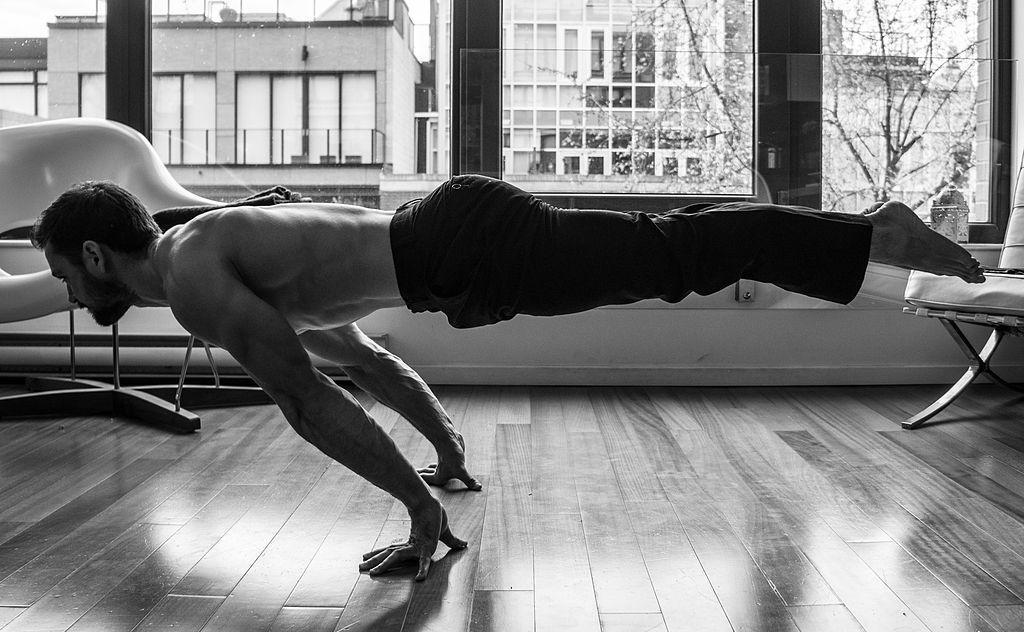
The Planche
This is an exercise that gymnasts learn early on and is a killer workout for your pecs, lats, deltoids and glutes. The planche puts a lot of strain on your delts, so it’s no surprise that gymnasts have boulders for shoulders.
What is a planche? It’s essentially a position where your whole body is held up in a horizontal position from the ground, by your arms. Thus, your body is parallel to the floor.
This is quite an advanced exercise and a great mass builder, especially when practiced every day. If bodybuilders see you doing this on the gym mats, expect instant respect, due to the amount of functional strength it takes to perform a planche.
Don’t expect to see Phil Heath doing one of these at BodyPower…
How to do a Planche:
Basic Planche Position
Move into a position where your knees are on the ground, with your arms down and hands on the floor in a forward body position. Your arms should be shoulder width apart with your fingers pointing forwards. If you have problems with your wrists it’d be a good idea to turn your fingers out slightly.
It’s important to lock out your arms and push down to the ground. Lean forward until your arms are at a 45-degree angle, then come back. Repeat this motion to strengthen/prepare your muscles to perform a full planche. You should arch your back during this movement.
This is the basic planche position.
Open Tuck Planche
Go into a pushup position and lock out your arms, positioning your upper body at 45-degree upward angle. Now as you lean forward you should go from the sole of your foot touching the ground to your toes touching the ground. As you progress you can lean even further forward and curl your toes under so the top of your feet are actually touching the floor.
Once you’ve got the hang of this from the floor you can elevate your legs by placing them on a stall, so when your arms lock out, instead of you being at a 45-degree angle, you’ll be exactly horizontal. With your feet on the stall, as you lean forwards, point your feet so only your toes are touching the stall (when your body is rocked forwards).
Then lean back and repeat this ‘rocking’ motion back and forth for reps.
Once you regularly practice these 2 movements you’ll soon be able to complete a full planche. Then you can work on holding this position for 30-60 seconds and eventually do planche pushups.
If you could create the perfect exercise to work the whole upper body, helping you build muscle and develop immense functional strength – it wouldn’t be too dissimilar to the planche.
If you have weak delts, incorporating the planche into your routine will make them blow up, giving you massive 3D shoulders.
Here’s a simple, yet powerful daily planche routine to help you pack on some upper body muscle.
Planche hold for 30 seconds x 5 sets
10 planche push-ups x 5 sets
Push-ups
Push-ups will always be one of the greatest exercises for developing the triceps, chest, and shoulders. This is the exercise prisoners speak of most when undergoing impressive transformations when inside, with inmates known to be doing hundreds/thousands of pushups each day (out of boredom).
Charles Bronson revealed in his book, Solitary Fitness, that he does 2,000 push ups every day, which he says contributes to him being able to possess near superhuman strength. He has been known to be able to pick up a full-size snooker table, do over 1,700 push-ups in just 60 minutes and squat with 3 men on his shoulders (don’t ask me how 3 men even fit on someone’s shoulders).
Oh and he’s been known to bend steel cell doors with his bare hands.
Bronson is a huge fan of bodyweight exercises and said that he didn’t do any “weights” (referring to dumbbells/barbells) for 8 years; then walked into a gym and bench pressed 300 pounds for 10 reps.
This is similar to the calisthenics guy who did 330 pounds for 1 rep on his first ever bench press.
Weighing 220 pounds at 5 ft 10, Charles isn’t just a strong specimen, but is also built like a beast.
A lot of guys in the army do hundreds/thousands of pushups during basic training. CT Fletcher says many veterans he speaks to all agree that the best shape they ever got in was during basic training. Greg Plitt, who was in the US army, is another great example of the type of mass you can build when combining endless amounts of push-ups with other bodybuilding exercises.
Different types of pushups:
Standard pushup
Clap push-ups
One-arm pushup
Diamond pushup
Handstand pushup
Clap pushups are great for developing power, one-arm pushups are a real test of strength, and diamond push-ups place more emphasis on your triceps, working your chest less.
When attempting the handstand push-up, if you haven’t quite got the balance of a tight-rope walker, take up a push-up position with your feet positioned next to a wall. Then from there slowly move your feet up the wall until you are in a handstand position – using the wall for balance.
Squats
Forget leg curls, extensions and presses; the king of all leg exercises will always be squats. And fortunately you don’t need a squat rack to perform them.
Mike Tyson was sent to Indiana’s correctional facility in 1992 and after serving 3 years he came out with tree-trunks for legs! He had done endless amounts of squats, with the following the same routine:
He’d start by placing 10 cards on the floor, with a few inches in-between each of them. Then he’d squat down to pick up the first card, then place it on top of the second card. To pick up the next 2 cards, he’d have to do 2 squats. Then after picking up those 2 cards and placing them on the 3rd card, to pick up those cards he’d have to do 3 squats – and so on.
Thus how many squats he’d do would be determined by how many cards there were in the pile. Doing this with 10 cards will mean you’ll complete 100 squats.
Evidence th-uggests that Mike Tyson liked this game – a lot.
Tom Platz was also known to be a fan of doing lots of bodyweight squats before leaving his home to go to the gym on leg day.
You can often argue who had the greatest biceps or back in bodybuilding, but when it comes to legs, there’s only one. Tom had by far the biggest and most aesthetic set of wheels bodybuilding’s ever seen.
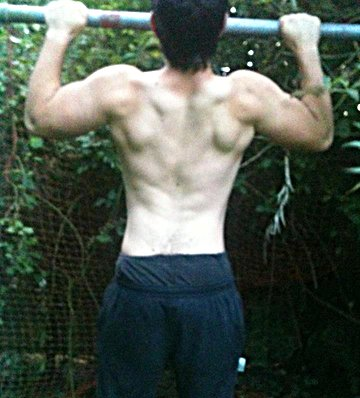
Pull-Ups
Gymnasts are doing pull-up motions when on the rings and prisoners also perform these in their cells; hanging onto objects such as pipes and bars. And if there are stairs in their cell they’ll often hang onto the steps underneath.
Pull-ups are great for you back, biceps and shoulders.
A chin-up is also a great bodyweight exercise, where your hands are positioned closer together than a pull up, holding the bar in a supinated grip (palms facing you).
A chin up will work your biceps more and your lats a little less, because of the narrower grip.
Once you become super-strong at pull-ups, you can move on to doing one-armed pull-ups and eventually muscle-ups.
If you’re ever seen someone doing muscle ups in a gym, this is the definition of showing off (in a good way of course).
The strongest my lats have ever been was when I was doing pull-ups on the crossbar of my football goal (in my dad’s garden). I was 18 years old at the time and was doing about 30 mins of pull-ups on this bar every day. I ached for the first couple of days but then my body adapted and my recovery levels dramatically improved.
My record for consecutive pull-ups during this time was 36.
When you think about it, it’s quite logical how pull-ups are so beneficial for adding mass. My weight was around 11 stone (154 pounds) at the time and I did 36 bodyweight pull-ups. So I was lifting a combined total of 396 stone (5,554 pounds) within the space of 45 seconds or so.
You might not have a football goal in your back garden that you can swing on like a monkey (guilty), but you can get a pull up bar that can be easily fixed in your house for a cheap price.
My back is genetically my strongest muscle group. I rarely ever prioritise my back workouts, yet it always remains BIG.
I say ‘genetically’ it’s my biggest muscle group, but genetics actually have nothing to do with it.
The size can be attributed to all the swimming I did in my teenage years. With swimming being a sport that requires you to pull yourself through the water, swimmers often develop great lats and V-tapers.
Just look at Michael Phelps’ wings.
Swimmer’s lats aren’t quite up to Mr Olympia size; but for an endurance sport, to develop big muscles like this is practically unheard of. Imagine what long-distance runners look like…skinny and frail.
This is because the body’s main objective when training for endurance is to be as light as possible, making it easier to propel your body through the water.
Even though I stopped swimming at around 13, when I began training for bodybuilding (and muscle memory kicked in), my lats ballooned up in size.
Rock climbing is another great bodyweight exercise for developing strength/mass for your lats. Just google ‘rock climber’s backs‘ and click on images.
A lot of guys who compete in rock climbing have skinny, ectomorph frames; but their backs are JACKED.
Dips
Dips are a great exercise for developing big triceps and a chest any silverback would be envious of. You can get a dip station to do these or you can use the sides of your bed to grip onto, with your feet on the floor.
Guess what, dips are another exercise prisoners do repeatedly to build a well-proportioned upper body.
To place more emphasis on your chest during this movement, lean your body forwards.
After bodyweight dips become too easy and you’re hitting 3 digits for reps, you can add more resistance by getting a belt and adding plates. Or you can order a weighted vest/jacket which can weigh up to 30kg (66 pounds).
Dips also work the lower head of your traps, which act as a stabilizing muscle during this exercise. This can explain the mystery of why your traps can ache so much after a hard workout involving dips.
Time Under Tension
There’s a correlation with every jacked guy/athlete mentioned in this article. Yes, they all do bodyweight training, but they also do ridiculous amounts of volume.
Some of you may already do some bodyweight exercises, but that doesn’t mean you’re going to automatically pack on mass like a male gymnast, unless you have exceptional genetics. The reason why gymnasts have abnormal muscularity for natural athletes is because of the extraordinary amount of volume and time under tension their muscles are under on a daily basis.
Gymnasts at Olympic level train for up to 30 hours a week, according to Gina Paulhus, who participated in the US Olympic gymnast program.
Let’s say you go to the gym for 1 hour a day and 5 times a week. This equals 5 hours a week. Gymnasts’ muscles will effectively be under tension for 6 times longer than this.
“But surely that’s overtraining?”
If you read my post: “Is Overtraining a Myth” on JackedNatural.com, you’ll learn that it’s impossible to overtrain a muscle. There are too many real-life examples of people stimulating a muscle for hours every day and developing huge muscles as a result.
Note: They stimulated their muscles, they didn’t annihilate them.
I also put this time under tension theory to the test, doing 25 hours of arms in the space of 5 days (in the gym). I did 5 hours a day Monday to Friday, pretty much replicating the same hours a gymnast would train in a week.
I can confirm that if you do this, expect to get some weird-ass looks from the gym staff from the 3rd hour onwards…
The results? I gained half an inch of solid muscle to each of my arms, which has stayed with me ever since.
This isn’t to say you should absolutely smash a muscle group with heavy weights for 25 hours, because that’s not what I did and that’s not what these other guys have done to gain their mass.
Instead I performed this experiment diligently. I made sure I was lifting really light weights and I never EVER went anywhere near failure. Stopping well before failure enables a person to keep their adrenaline levels low and prevents them from frying their central nervous system.
Once your CNS becomes too stimulated, you’ll go from anabolic to catabolic.
Hence how I say: “You can’t overtrain a muscle, but you can overtrain your nervous system”.
This is exactly how gymnasts and prisoners avoid overtraining. They aren’t lifting extremely heavy weights (for them), thus they’re preventing their adrenaline levels from spiking significantly.
Instead they lift weights at a lower intensity so their muscles can work for 40 seconds or more at a time. This is the time gymnasts spend on the rings when competing.
This is the equivalent of doing 20 reps on an exercise, assuming you spend 1 second for the concentric part of the movement and 1 second for the eccentric.
And you won’t be able to lift a really heavy weight for 20 reps, hence how I always lift light.
The Ultimate Bodyweight Workout
Dips – 100 reps
pull-ups – 50 reps
Planche – hold for 60 seconds x 5 sets, 15 planche push ups
Push ups – 100 reps
Bodyweight Squats – 100 reps
Note: I haven’t specified the amount of sets, because it doesn’t matter if you do 3 sets or 10 to complete the reps. As long you do the amount of reps stated in this workout, you’ll be doing a good amount of volume – forcing your muscles to grow.
You can also throw sit ups in with these exercises to work your core, but I don’t personally do direct ab work as your abs will be contracting during all bodyweight exercises (especially squats).
The above workout should take you approximately 40 minutes to do. If you can do this workout 5 times a week you will notice good strength and size gains.
If ‘good’ gains aren’t enough because you refuse to settle for anything less than amazing gains…snap that kid curling in the squat rack, go to prison, train all day long and come out an absolute beast. Or just take up gymnastics full time.
I hope you’ve enjoyed this article, it’s been a long one so if you’re still reading this – thank you for your patience/perseverance! I hope these tips will help you build a better physique and potentially save you money if you don’t want a gym membership.
Build Your Body + Develop Dynamic Strength and Control with Bodyweight Exercises
Check out the ONLY bodyweight training program I know of to help you build strength, muscle, and how to properly progress over time.
About The Author
Erny Peibst is the guy behind bodybuilding blogs Jacked Natural and Are They on Steroids? On Jacked Natural he helps guys with poor genetics build more muscle from sharing certain tips and tricks that have helped him get jacked. On Are They on Steroids, he discusses who he personally thinks are taking steroids in the fitness niche.
You can read more about Erny’s transformation here.